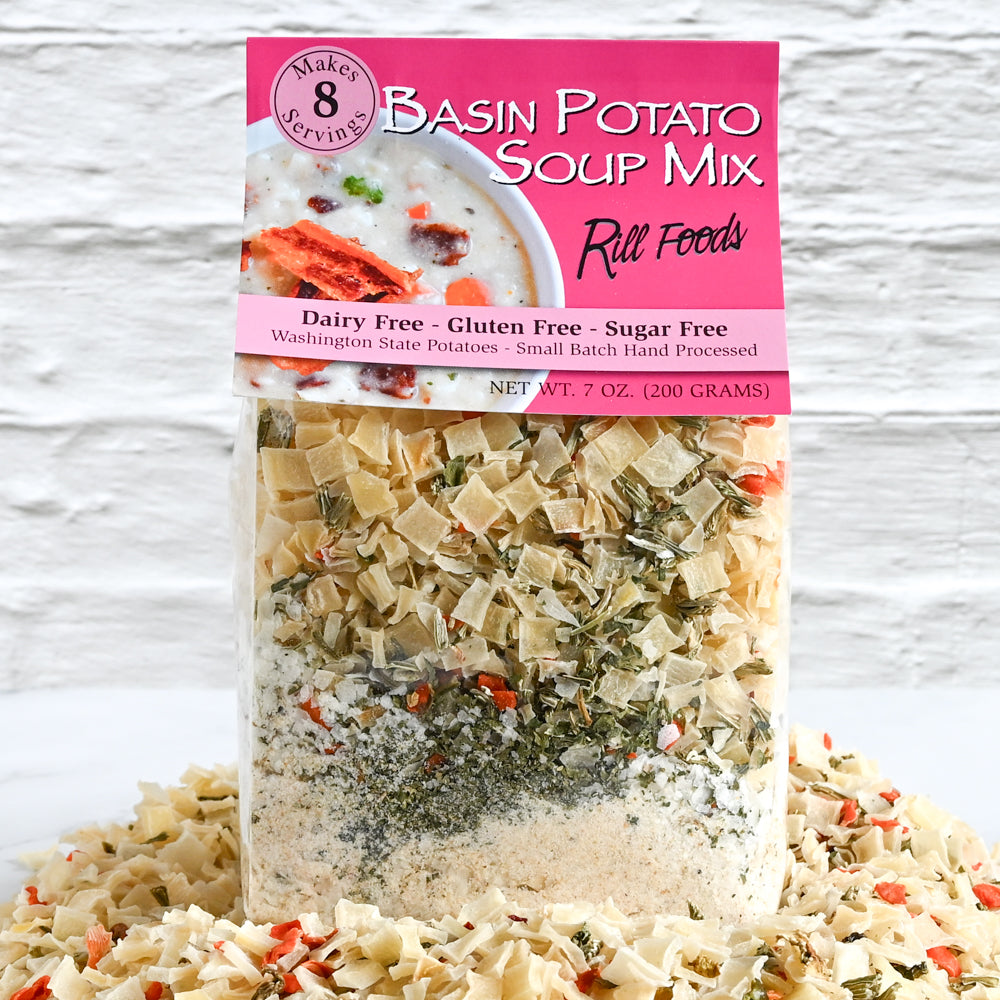
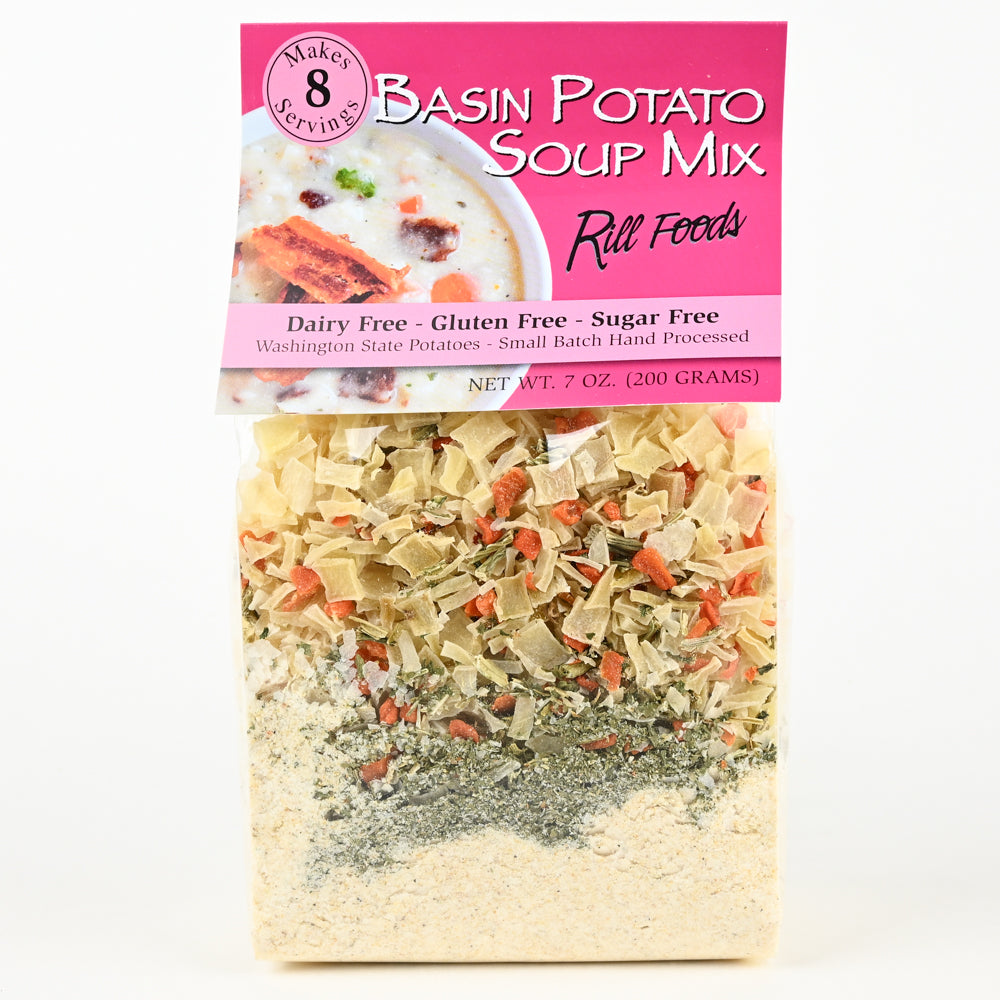
Since the beginning, we've named our soups after real places throughout Washington and the surrounding Northwest. From small towns and mountain peaks to rivers, canyons, and historic landmarks, each name was chosen because it means something to us and the region we call home. Each soup has a story, and so does the place that gave it its name.
The Columbia Basin has been home to Native Americans for thousands of years. The oldest known evidence of human habitation in the North America was discovered in this region and dates back between 9,000 and 11,000 years.
Although Native Americans lived in the Basin for millennia, European explorers did not arrive until the 1830s. Permanent settlement followed about 50 years later, fueled by the expansion of the Northern Pacific and Great Northern Railroads.
The Basin is known for its desert-like landscape. In the early 1900s, settlers recognized the potential of its fertile volcanic soils and wide-open spaces. Two irrigation plans were proposed in 1918: one using canals and aqueducts, and the other centered around a dam at Grand Coulee on the Columbia River. The dam proposal was ultimately chosen, and construction on Grand Coulee Dam began in 1933 during the height of the Great Depression.
Today, Grand Coulee Dam provides electricity to much of the Pacific Northwest and supplies irrigation water to more than 500,000 acres of farmland.
Once irrigation water reached the Basin, the region's potential for growing potatoes became clear. The combination of fertile volcanic soil, a long growing season, abundant water, and a favorable climate helps produce some of the highest potato yields in the world. More than 160,000 acres of potatoes are planted each year, with average yields of about 30 tons per acre—nearly double those achieved in many other potato-growing regions.