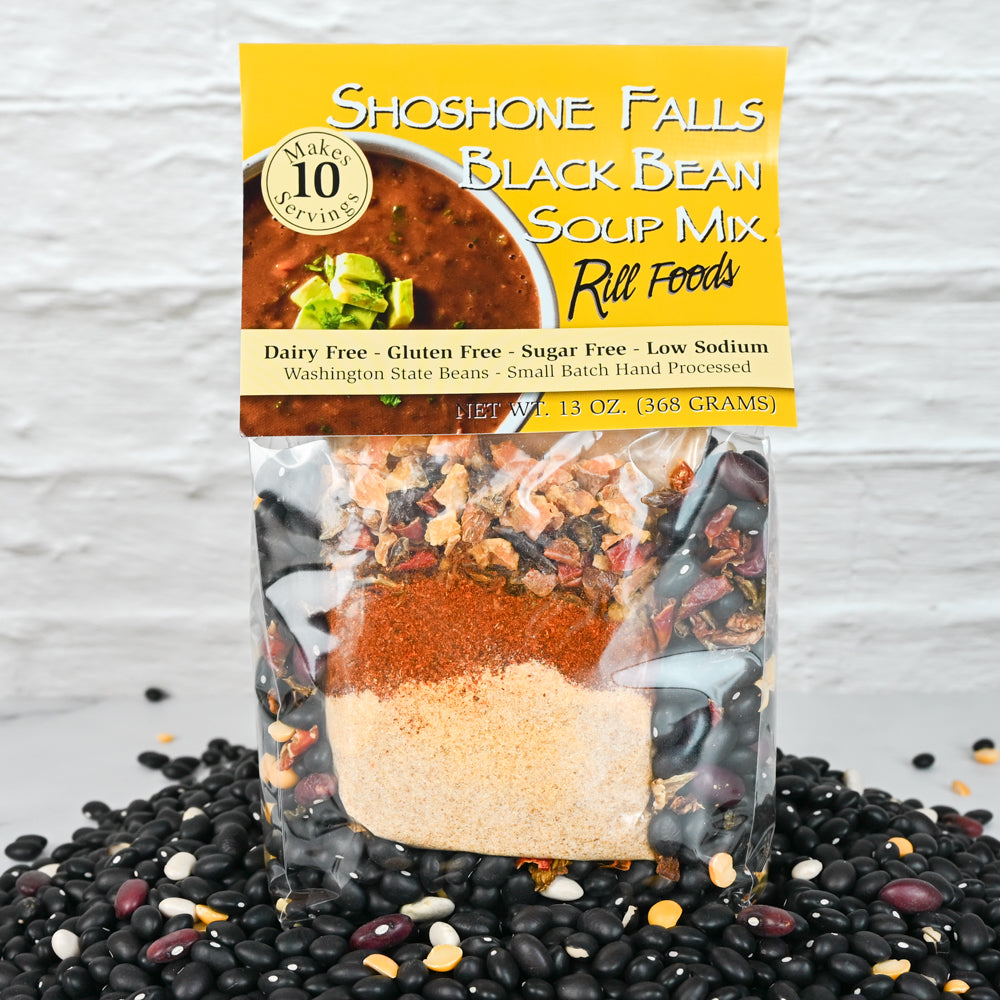
Since the beginning, we've named our soups after real places throughout Washington and the surrounding Northwest. From small towns and mountain peaks to rivers, canyons, and historic landmarks, each name was chosen because it means something to us and the region we call home. Each soup has a story, and so does the place that gave it its name.
Shoshone Falls is truly one of nature’s wonders. Standing 212 feet tall, it is 45 feet higher than Niagara Falls. The rim stretches nearly 1,000 feet across in a broad horseshoe-shaped arc. In the summer, water often trickles over the edge, but in the spring, melting snow swells the Snake River and sends water roaring over the rim and crashing into the canyon below.
Located five miles east of Twin Falls in south-central Idaho, Shoshone Falls earned the nickname “Niagara of the West” in the early 1900s. Over time, dams and irrigation projects on the upper Snake River have reduced its flow, but it remains a powerful and memorable sight, especially in early spring before upstream diversions take effect.
Geologists believe the falls were formed during the Bonneville Floods and have marked the division between the upper and lower Snake River for more than 17,000 years. Before modern dams, Shoshone Falls was the furthest point salmon could travel upstream. Native American tribes gathered here during seasonal runs to catch and dry their yearly supply of fish—legend even suggests the waters were so full of salmon that a spear thrown at random would always strike one.
Today, visitors still gather at the falls each spring, not to fish, but to take in one of the region’s most striking natural landmarks.