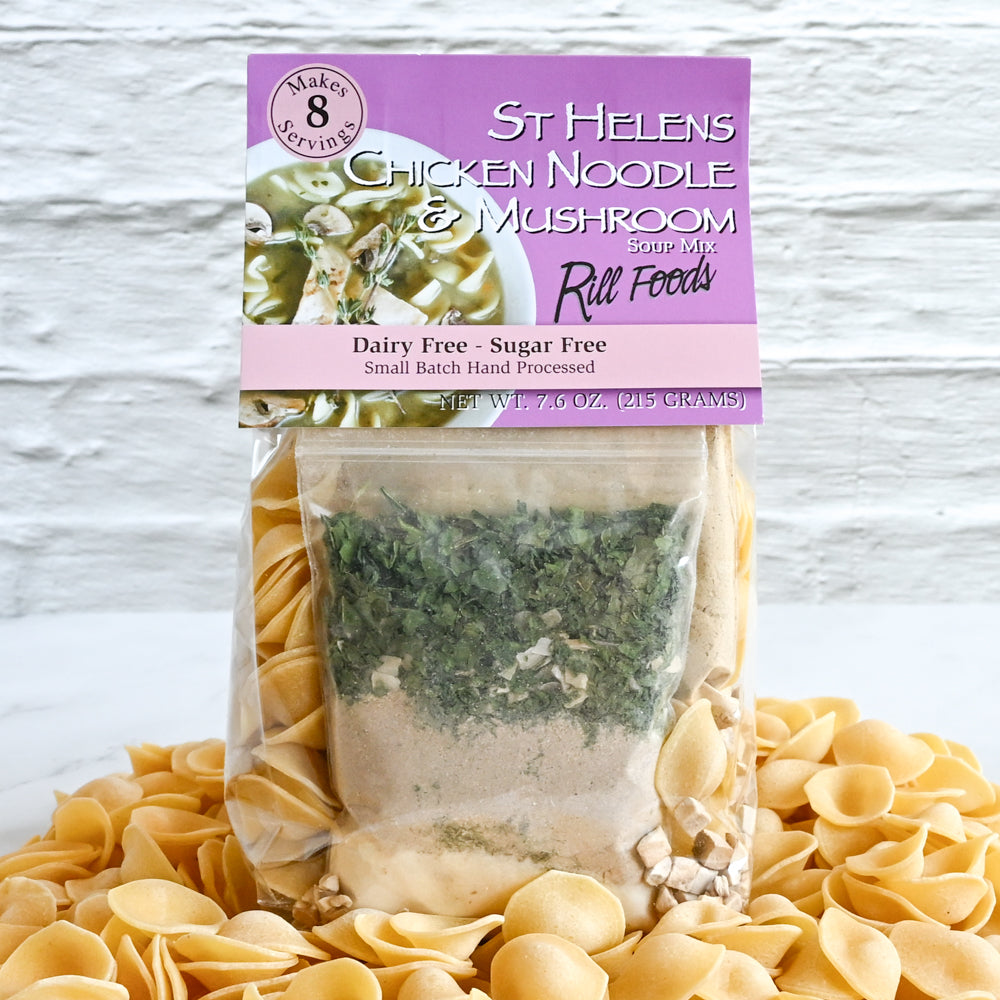
Since the beginning, we've named our soups after real places throughout Washington and the surrounding Northwest. From small towns and mountain peaks to rivers, canyons, and historic landmarks, each name was chosen because it means something to us and the region we call home. Each soup has a story, and so does the place that gave it its name.
There are 18 volcanoes in the Cascade Range, but only one is associated with the deadliest volcanic event in United States history.
On May 18, 1980, Mount St. Helens erupted in a powerful display of force. A series of earthquakes and evacuation warnings preceded the eruption, yet 57 people still lost their lives. Homes were destroyed, roads were decimated, and rail lines were buried under ash and debris.
Experts believe one reason so many people were in harm’s way was the direction of the eruption. Instead of a vertical blast, the north side of the mountain collapsed following an earthquake, releasing a massive lateral explosion of lava, steam, and gas. This triggered a pyroclastic flow that overtook areas that might otherwise have been safe. The eruption lasted more than nine hours and sent an ash plume 12 miles into the atmosphere. Winds carried ash northeast, with deposits reaching as far as Edmonton, Alberta, Canada.
As ice and snow melted on the mountain, lahars and floods rushed through surrounding river valleys. In the aftermath, much of the landscape resembled a moonscape—trees flattened, valleys buried in ash, and rivers choked with sediment.
Today, Mount St. Helens remains one of the most active volcanoes in the Cascade Range. Despite its volatility, it has become a place of striking beauty and reflection—offering opportunities for hiking, camping, fishing, and experiencing the power of nature firsthand.