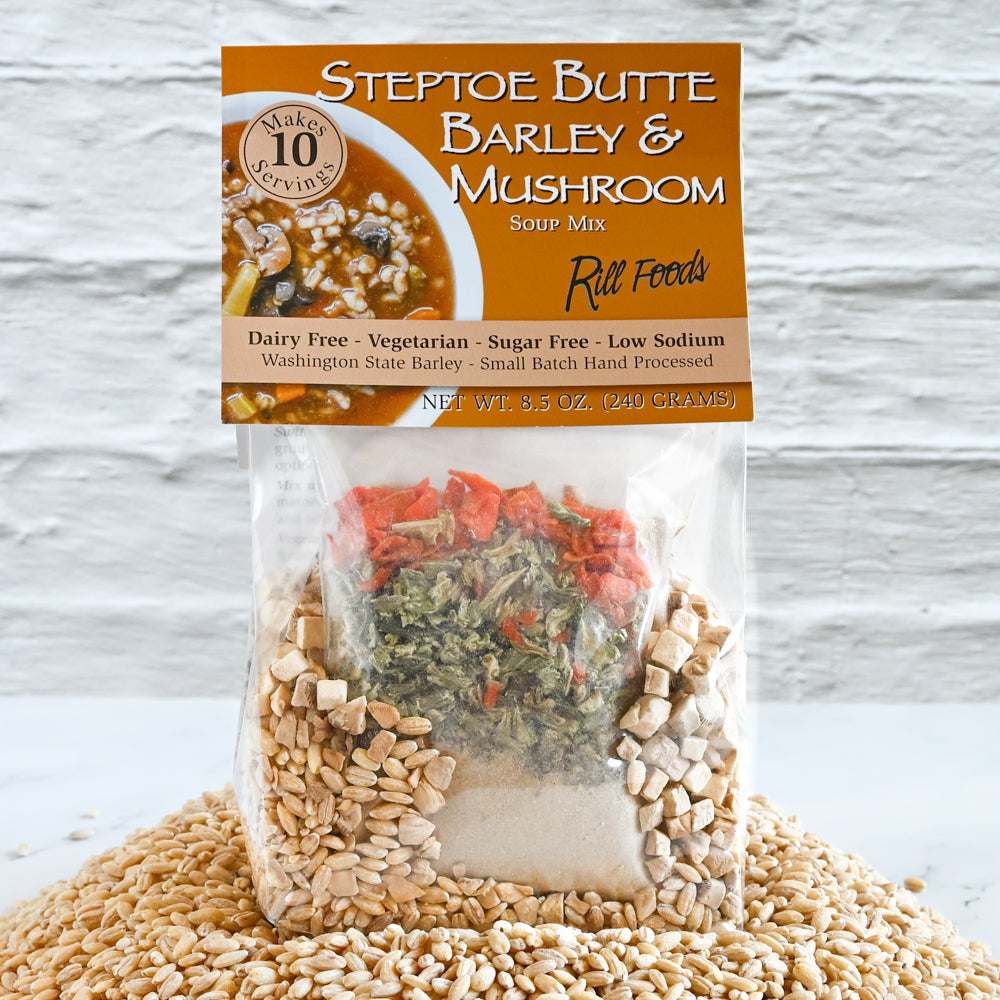
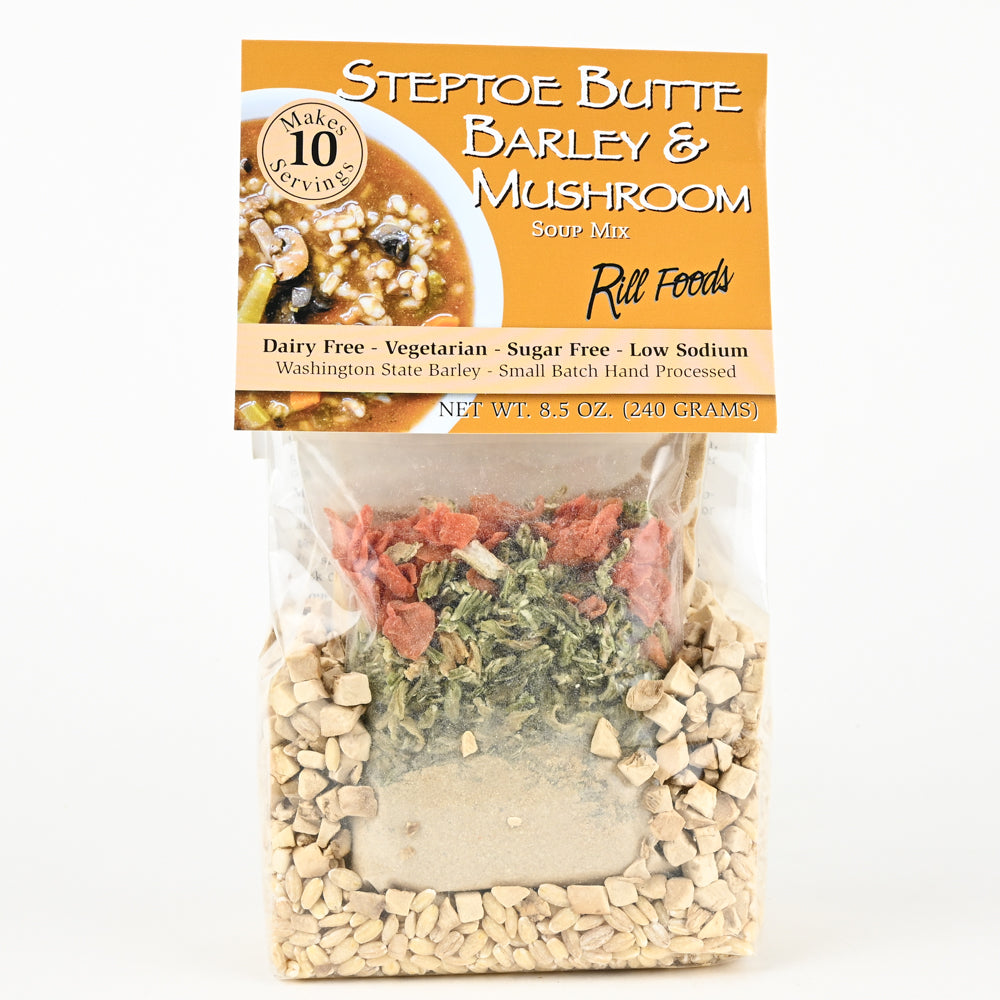
Since the beginning, we've named our soups after real places throughout Washington and the surrounding Northwest. From small towns and mountain peaks to rivers, canyons, and historic landmarks, each name was chosen because it means something to us and the region we call home. Each soup has a story, and so does the place that gave it its name.
Rising from the rolling hills of the Palouse, Steptoe Butte offers sweeping views of surrounding farmland, the jagged Bitterroot Mountains of Idaho, and the distant Blue Mountains of southeast Washington. With a total elevation of 3,612 feet, the road to the summit climbs about 1,600 feet over 4½ miles, spiraling upward in three full 360-degree loops.
Steptoe Butte is designated a National Natural Landmark for its geological significance. It is a remnant of ancient rock that rises through layers of much younger basalt, standing apart from the surrounding landscape.
In 1877, James A. Davis operated a roadhouse at the base of the butte, hosting parties and dances that drew people from across the region. This continued until 1883, when railroads expanded through the Palouse and stagecoach traffic declined. Seeking new visitors, Davis later built a grand hotel at the summit in 1888, complete with two stories and a rooftop balcony for sightseeing. He died in 1898 without seeing the hotel succeed, and the abandoned structure burned about 15 years later.
The area was later preserved as a public park through the generosity of Virgil McCroskey, who donated two parcels of land to the state in 1945 and 1946, with the condition that it remain a public park in perpetuity.