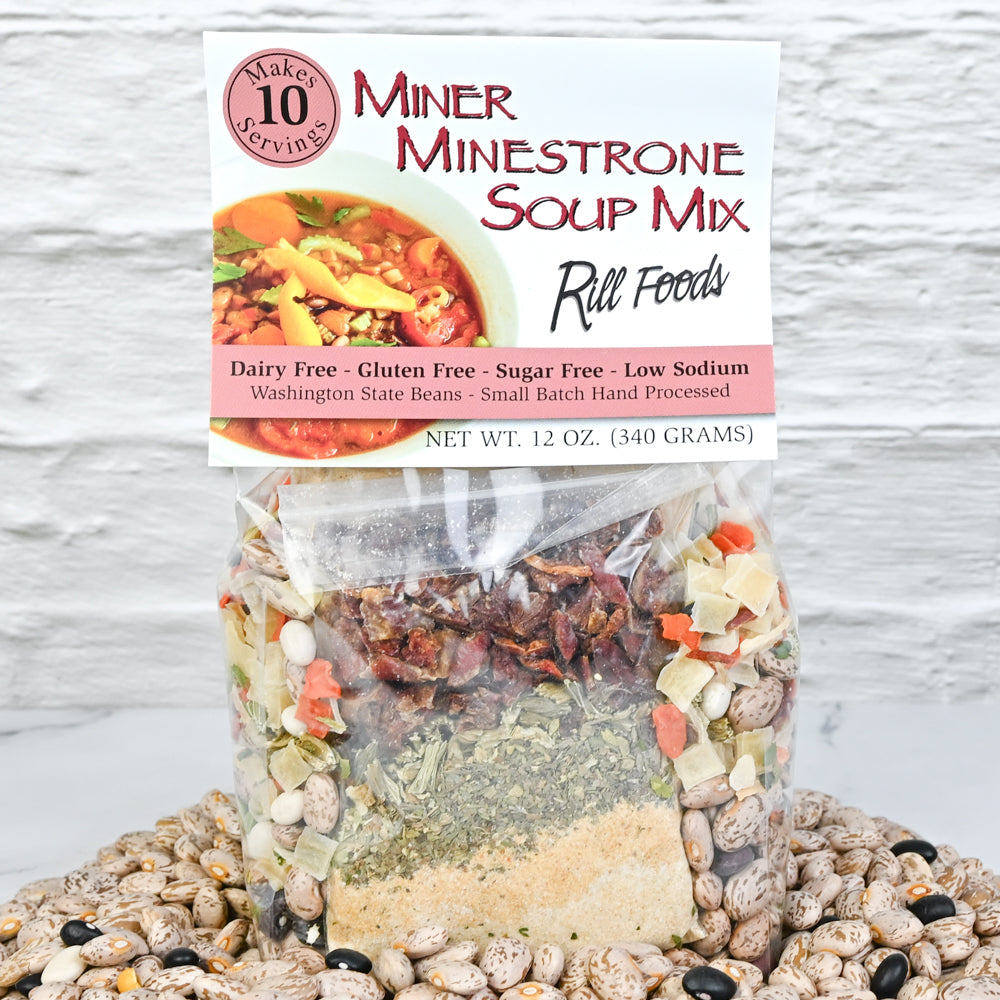
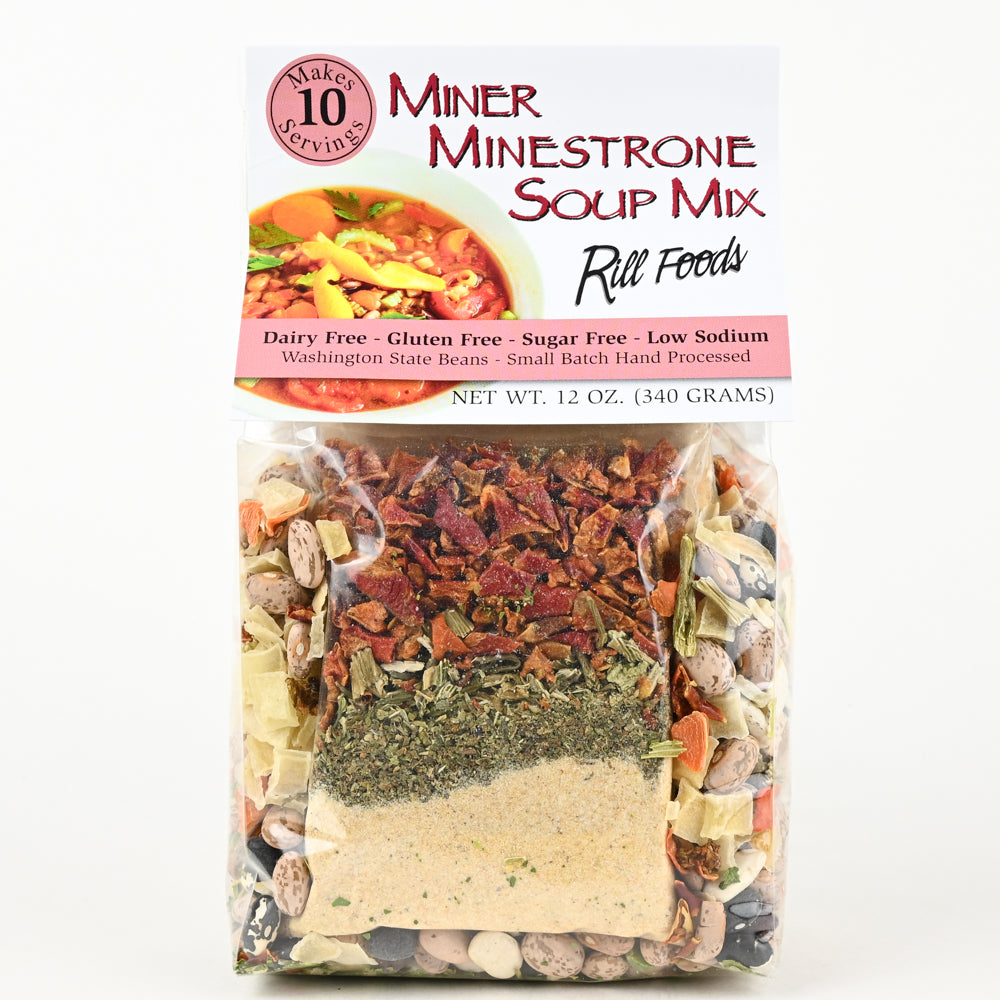
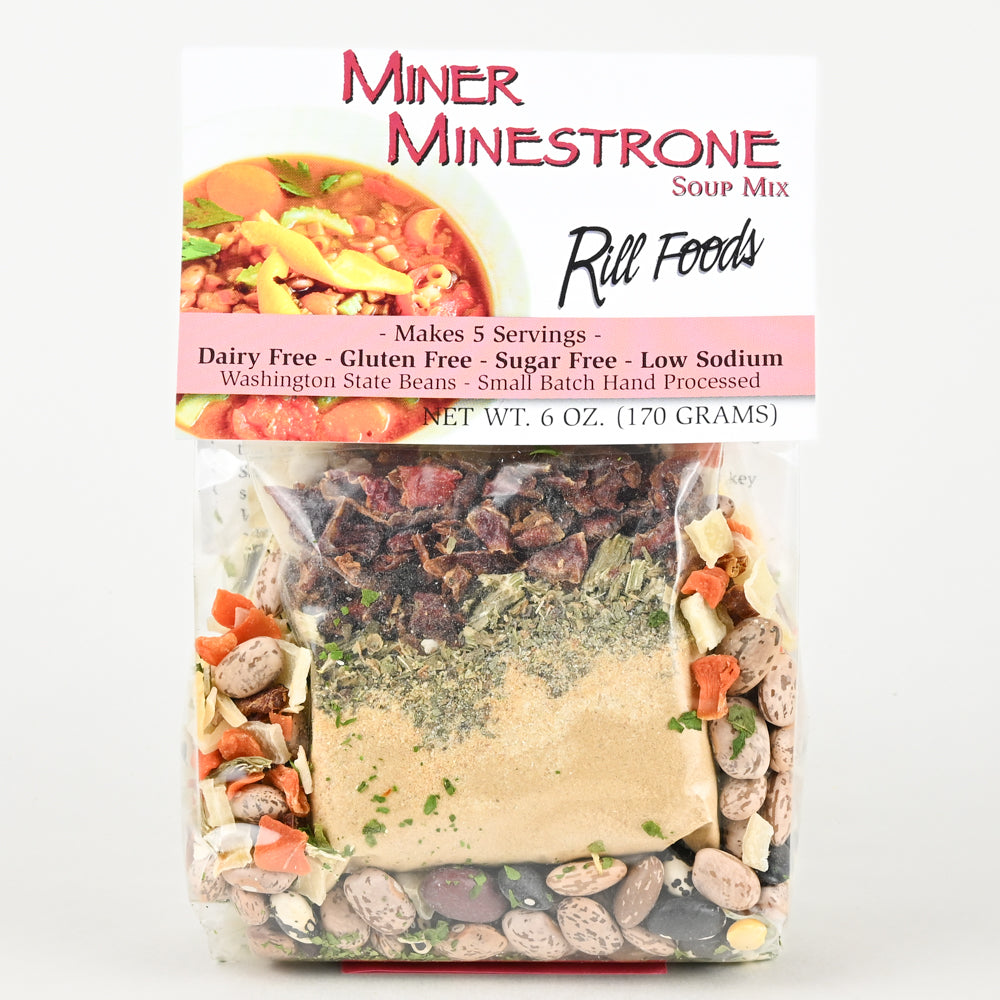
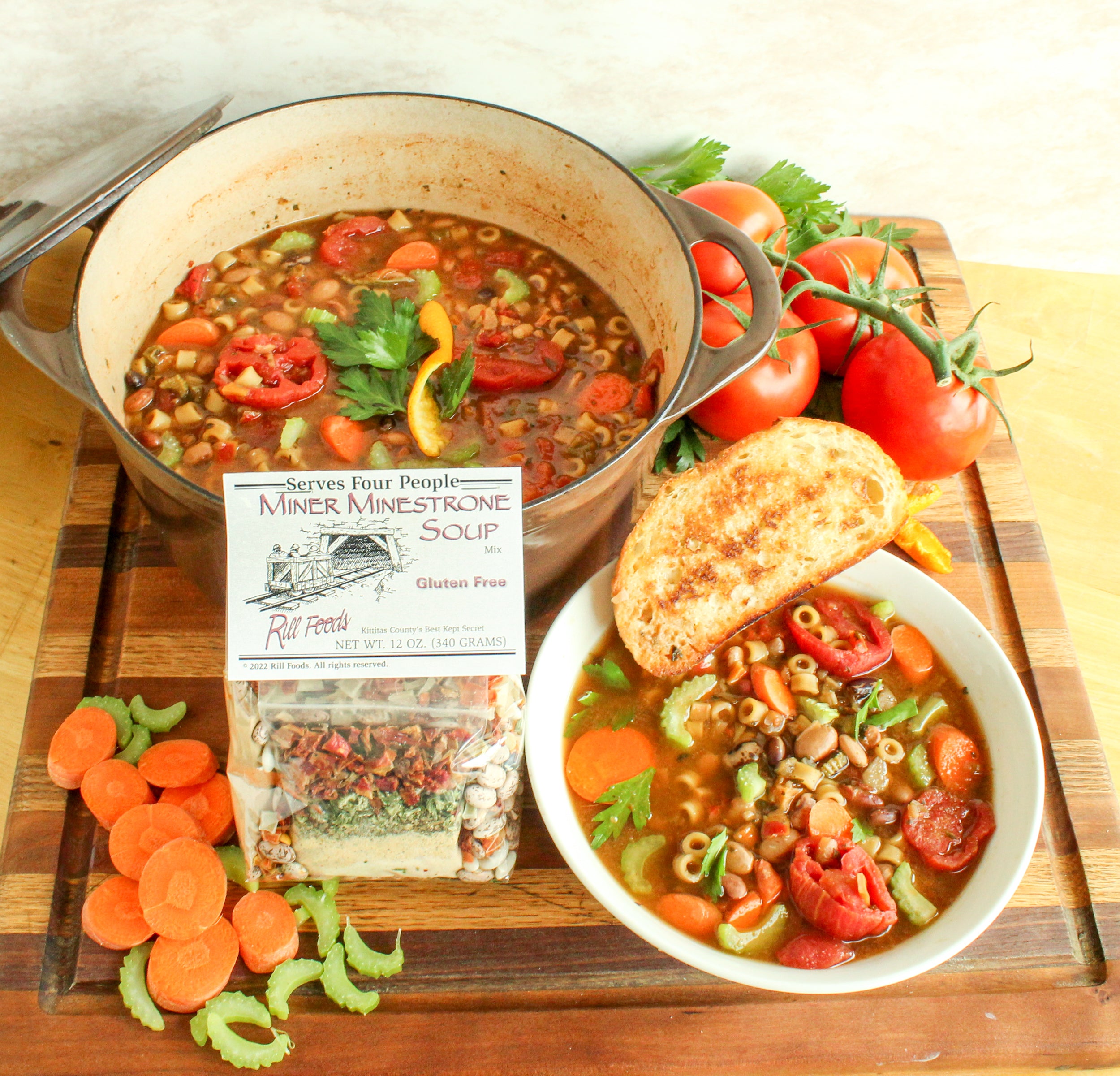
Miner Minestrone Soup Mix
Classic minestrone soup loaded with five kinds of beans, vegetables, and savory herbs — with a hint of orange zest that adds a bright, unexpected lift. Add your favorite pasta to make it a full meal.
INGREDIENTS
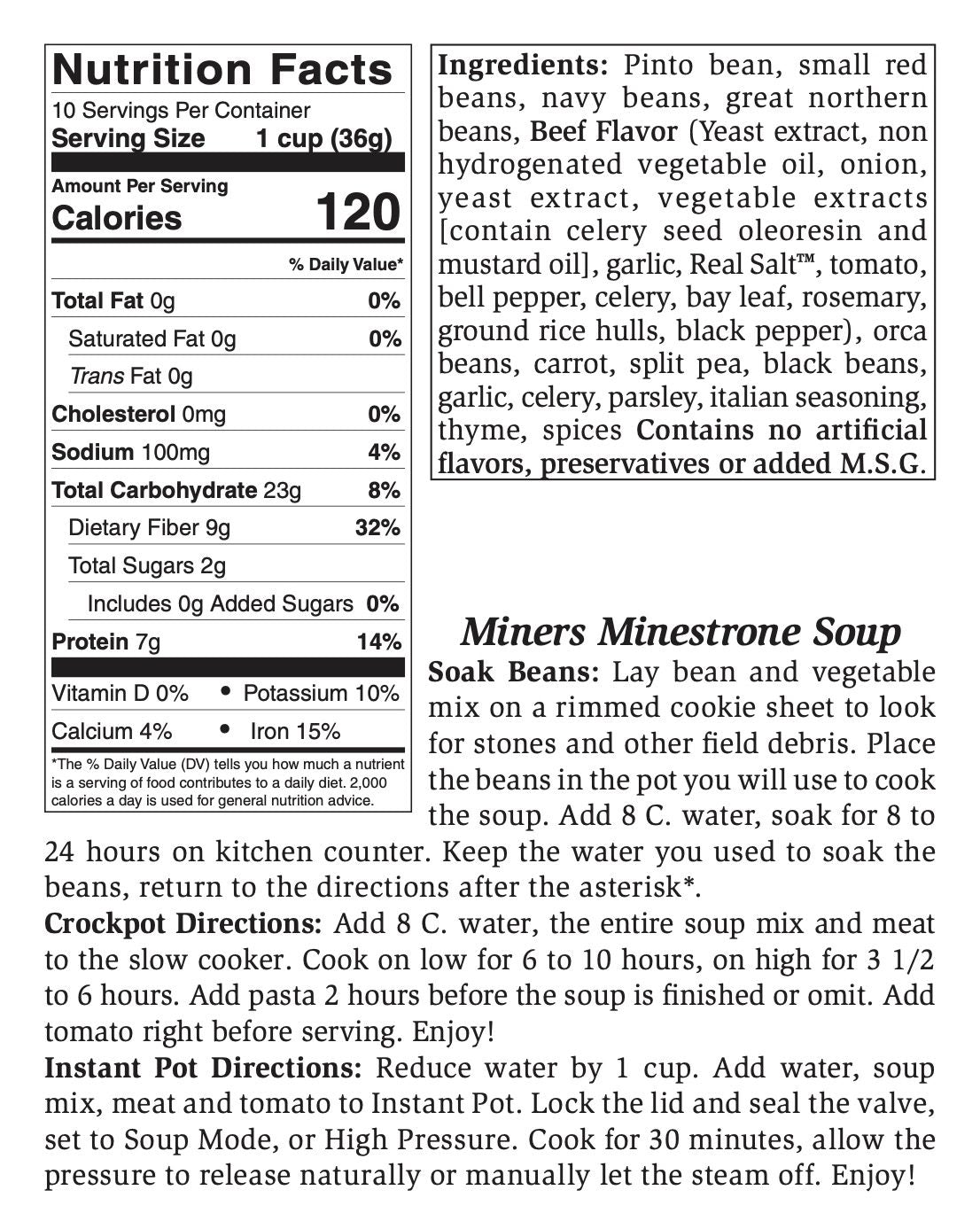
Ingredients: Pinto bean, small red beans, navy beans, great northern beans, Beef Flavor (Yeast extract, non hydrogenated vegetable oil, onion, vegetable extracts [contain celery seed oleoresin and mustard oil], garlic, Real Salt™, tomato, bell pepper, celery, bay leaf, rosemary, ground rice hulls, black pepper), orca beans, carrot, split pea, black beans, garlic, celery, parsley, italian seasoning, thyme, spices
Whenever possible, we source our ingredients from Pacific Northwest farmers and processors. We believe local sourcing means fresher ingredients, fewer transportation miles, and stronger relationships with the people behind our food.
COOKING DIRECTIONS
SMALL SIZE You will need
- 1/2 pound ground beef, leftover steak or roast
- 4 cups water
- 8 oz tomato sauce
LARGE SIZE You will need
- 1 pound ground beef, leftover steak or roast
- 8 cups water
- 15 oz tomato sauce
Stove Top Directions:
- Open Bag with scissors
- Look through bean and vegetable mix for stones.
- Soak beans, optional (Pour the beans in a pot. Add 8 C. water, soak for 8 to 24 hours on kitchen counter. Keep the water you used to soak the beans and go to the next step, do not add more water.)
- In saucepan add water to bean mix. Cover and bring to a boil, reduce heat and let simmer until beans soften, about 1 hour.
- When beans begin to soften, add both spice packets, tomatoes, & cubed meat.
- Return to simmer until, beans and meat are done about 30 minutes.
- Add pasta and simmer for another 10-15 minutes.
- Salt and pepper to taste. Serve.
Instant Pot Directions: Reduce water by 1/2 cup for the small size or 1 cup for the large. Add water, entire soup mix, meat and tomato to Instant Pot. Lock the lid and seal the valve, set to Soup Mode, or High Pressure. Cook for 40 minutes, allow the pressure to release naturally or manually let the steam off. Enjoy!
Crock-Pot Directions: Add water, the entire soup mix and meat to the slow cooker. Cook on low for 6 to 10 hours, or on high for 3 1/2 to 6 hours. Add pasta 30 minutes before the soup is finished. Add tomato right before serving. Enjoy!
SPICE IT UP
Switch up the tomato: For a deeper, richer flavor, try replacing the tomato with a can of Italian stewed tomatoes.
Switch up the meat: Substitute Italian sausage or turkey sausage for a leaner option.
Low Sodium: Discard the beef packet and replace 2 cups of water with low sodium beef broth, or simply use less of the beef packet to reduce sodium content.
Vegetable Overload: 10-15 minutes before the soup is done, add 1-2 cups of vegetables like cabbage, carrots, mushrooms, leeks, or cauliflower for an extra boost of nutrition and flavor.
Citrus Kick: Enhance the soup with a squeeze of fresh orange juice just before serving.
Make it Creamy: Add a splash of heavy cream or half-and-half toward the end of cooking for a smooth, creamy texture.
Pasta Twist: Add small pasta shapes like ditalini or orzo toward the end of cooking.
Cheese Topping: Top the soup with freshly grated Parmesan cheese and a drizzle of olive oil for added richness.
Fun Fact: Legumes are naturally low in total fat, contain no saturated fat or cholesterol and are an excellent source of protein, calcium, iron, folic acid, and potassium.
TIDBITS OF HISTORY
Since the beginning, we've named our soups after real places throughout Washington and the surrounding Northwest. From small towns and mountain peaks to rivers, canyons, and historic landmarks, each name was chosen because it means something to us and the region we call home. Each soup has a story, and so does the place that gave it its name.
Tidbits of History about Coal & Mining in the Northwest
In Washington State, the Leary Coal Company opened a coal seam at Ravensdale in 1890. The discovery soon attracted the Northwest Improvement Company, the coal-mining arm of the Northern Pacific Railroad. The company purchased the land and brought in experienced miners from the East Coast, including Italian, Polish, and Lithuanian workers, to help develop the operation.
Roslyn sits atop a coalfield that stretches for seven miles. Just two years after a homesteader first exposed coal with a pick and shovel, the Northern Pacific Railroad evaluated the deposits and quickly began large-scale mining operations. By 1898—less than a decade after the mines opened—Roslyn accounted for nearly half of Washington’s coal production. At its peak in the 1920s, production reached two million tons annually. Wages in the Roslyn mines were notably strong; two days of work could equal nearly two weeks of wages for a garment worker in New York City at the time.
In Idaho, mining also played a defining role in the state’s early economy and continues to be important today. The Coeur d’Alene mining district is considered one of the richest silver-producing regions in the world. By 1985, the mines had produced their one-billionth ounce of silver, along with significant quantities of lead, zinc, and copper. The Silver Valley is also home to notable operations such as the Morning Star Mine, once among the deepest mines in the United States.
Minestrone itself has no single set recipe, and the name has come to mean a “hodgepodge” of ingredients. It remains one of the cornerstones of Italian cuisine and is, in many regions, more widely eaten than pasta.


Choose options


FAMILY RECIPES
We are a 2nd generation family run business.
LOCAL PRODUCTS
Made from local ingredients, one batch at a time.
SINCE 1985
Focused on what matters: crafting hearty, flavorful soups that taste homemade.